Construction Presentation Training: Building Speaking Skill Across the Field and the Office

Construction professionals are trained to build, not to speak. Yet project managers, superintendents, estimators, and executives all present on a regular basis, and the quality of those presentations affects win rates, owner relationships, and internal alignment. Construction presentation training gives these people the practical tools they need without asking them to become performers. A well-designed program can be delivered in short sessions that fit around project schedules, so people can apply each lesson right away on live work.
Match the Training to the Role
A superintendent presenting a logistics plan needs different skills from an executive presenting company qualifications. Good programs separate the roles. Field leaders practice explaining sequence and constraints in plain language. Project managers practice presenting cost and schedule. Executives practice setting the tone and framing the firm's value in the first two minutes. Role clarity also helps leadership decide who should present in each setting. Some strong builders prefer to support from the side, and a good program respects those strengths while building everyone's baseline.
Teach Structure Before Style
Most weak presentations suffer from structure, not delivery. Training introduces a simple pattern: state the point, support it with two or three pieces of evidence, and close with the action required. Applying that pattern to every slide and every section produces clearer talks even from people who feel uncomfortable at the front of a room. A useful drill is the thirty-second summary. Each participant explains a current project to a colleague in half a minute, then repeats it with feedback. The exercise forces choices about what matters most.
Simplify the Slides
Construction decks tend to carry dense schedules, spreadsheets, and plan sheets. Training shows participants how to extract the single message from a complex exhibit and display it in a form the room can absorb quickly. A schedule becomes three milestones. A cost table becomes one comparison. The detailed version stays available in the appendix. Teaching people to ask what a slide is supposed to prove improves the whole deck. If a page cannot answer that question in one sentence, it should be reworked or removed before the meeting.
Rehearse Under Realistic Conditions
Skill develops through repetition with feedback. Sessions should include timed practice, recorded runs, and a panel that asks real questions. Participants gain confidence when they have already faced a skeptical owner in a rehearsal, and the experience of watching their own recording is often the most useful part of the program. Video review is uncomfortable at first and valuable afterward. Participants quickly see habits such as reading from slides, speaking too fast, or avoiding eye contact, and they can correct them with simple exercises.
Prepare Teams, Not Just Individuals
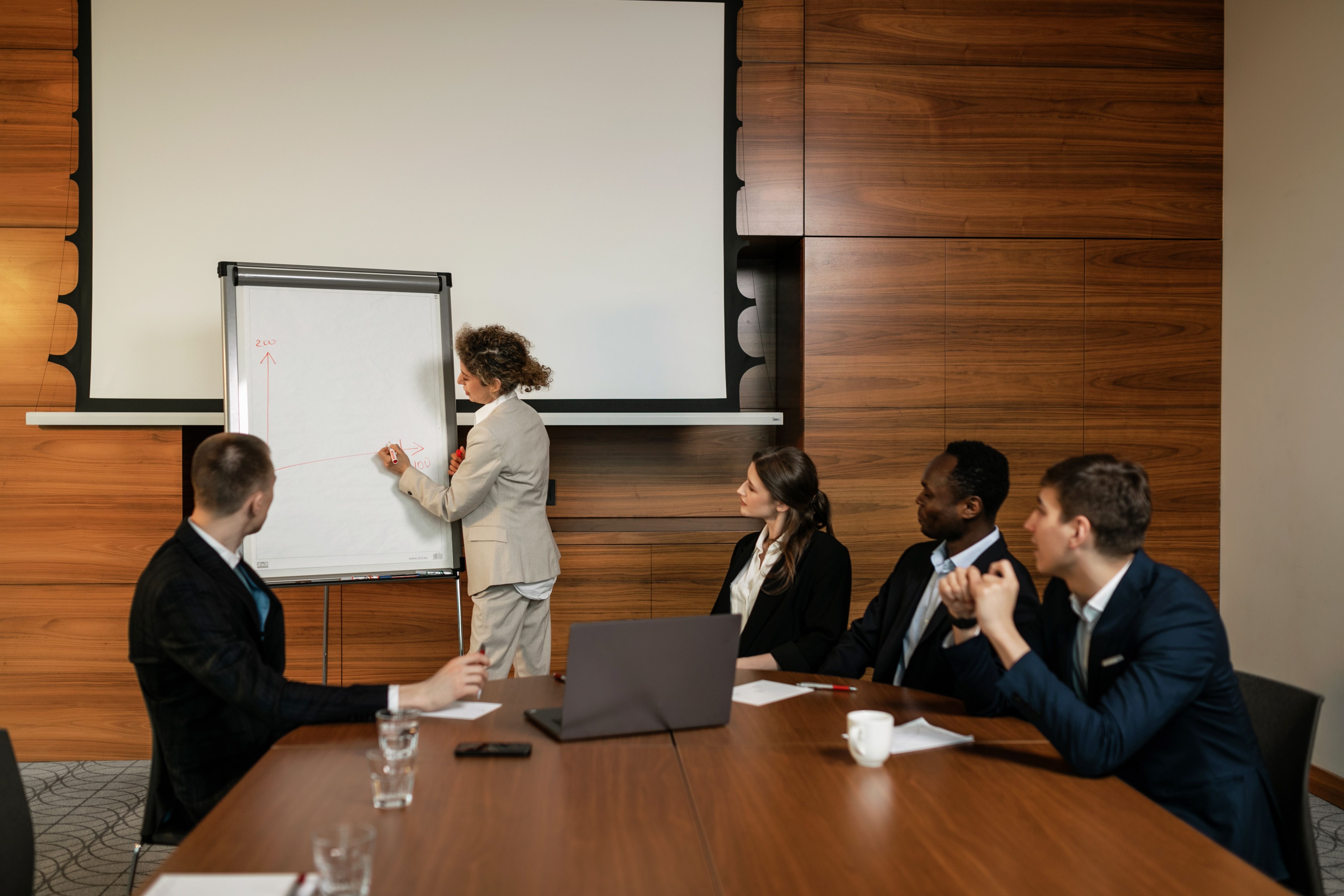
Pursuit presentations are team events. Training covers handoffs between speakers, shared vocabulary, consistent slide formatting, and how to support a teammate who is answering a question. A team that rehearses together presents with a coherence that owners notice. Teams should also agree on how to field questions. Naming a lead for cost, one for schedule, and one for safety avoids overlapping answers and shows the owner that responsibilities are clear.
Measure and Reinforce
Firms can track results by recording win rates on interviews, collecting feedback from owners, and noting how often presenters ask for coaching. A short refresher before each major pursuit keeps habits fresh, and pairing newer staff with experienced presenters spreads the standard. Executives can sponsor the effort by attending a session, presenting their own practice talk, and asking for improvement in their own delivery. Visible participation sets the tone for the whole company.
The Bottom Line
Construction presentation training is practical, role-specific, and built on rehearsal. It teaches structure, simplifies exhibits, and prepares teams to speak with one voice. For firms that depend on interviews and owner trust to win work, it is a modest investment with direct effect on results. Start with one pursuit team and a single upcoming interview. Results from that pilot make it easier to extend the program to other groups with confidence.